Why Synthetic Roof Covering Chicago Projects Need Climate-Smart Products
Chicago does not forgive weak roof choices. A roof covering below needs to endure freeze-thaw cycles, lake-effect wind, summertime warm, driven rainfall, hail storm, ice dam problems, and the kind of temperature level swings that expose every shortcut in style and setup. That truth is why much more owners, engineers, and building contractors are looking very closely at artificial roofs, particularly on homes where appearance matters as much as lasting performance.
The conversation is not just regarding picking a roofing system that looks good on the first day. It has to do with selecting a material system that can manage the local environment without requiring consistent repair services, early replacement, or compromises in curb charm. In the Chicagoland market, where a roofing may be asked to simulate slate, cedar, or tremble while still satisfying modern expectations for sturdiness, climate-smart product option matters more than advertising and marketing language.
Synthetic roof covering has actually grown well beyond its early credibility. The best products now incorporate crafted polymers, UV stabilizers, influence resistance, shade consistency, and lighter weight in ways that solve practical problems on real homes. For a synthetic roof covering Chicago project, that mix can be specifically valuable, gave the item and the installer are both selected with care.
Chicago climate is not one problem, it is numerous piled together
Many roofing conversations minimize environment efficiency to a solitary problem, typically snow or wind. In Chicago, the challenge is collective. A roofing system can cook under strong summertime sunlight, after that sit under ice and snow months later on. It can be completely dry one week and hit with wind-driven rainfall the next. Those duplicating cycles wear out materials not simply via big tornados, however through consistent growth, tightening, moisture exposure, and surface abrasion.
Natural products can be attractive, but they include well-known vulnerabilities in this climate. Cedar can take in dampness, climate erratically, and need normal maintenance to stay in shape. Natural slate is sturdy, yet heavy, brittle under influence, and expensive to repair when individual items fracture or slip. Standard asphalt stays typical, but many standard items just do not provide the very same layout worth or life span anticipated on higher-end homes.
That is where building artificial roofing gets in the discussion. It offers the aesthetic character of typical premium products while resolving some of the real-world weak points those products deal with in a location like Chicago. Weight, effect performance, freeze-thaw resistance, and installment flexibility all come to be central issues, not side notes.
Why climate-smart materials matter extra on costly homes
The stakes increase on custom-made homes, historic-inspired builds, and bigger homes with difficult rooflines. These projects often involve valleys, dormers, steep pitches, turret elements, long eaves, and other details that turn a roof right into a building feature. When the roof covering projects, homeowners desire the deepness, structure, and shadow lines of slate or hand-split cedar. At the exact same time, they do not desire consistent maintenance crews in the driveway.
Synthetic roofing for luxury homes works finest when it solves both sides of that equation. It has to look convincing from the road and from close quarters. It additionally has to remain secure on a roof subjected to snow loads, thermal motion, and high winds. On superior homes, very early failing is more than a repair work issue. It disrupts appearance, impacts resale perception, and can cause costly downstream damage in trim, outdoor decking, insulation, and interior finishes.
I have actually seen proprietors invest greatly on exterior rock, copper information, and custom-made home windows, after that attempt to economize on the roof assembly itself. In the Chicago area, that usually turns up later on as distorted courses, persisting blinking leakages, ice dam difficulty, or a roof covering that ages erratically and threatens the whole altitude. Costs artificial roof covering makes good sense when it is dealt with as component of the building envelope, not as an attractive afterthought.
Synthetic roof covering is lighter, which changes the structural equation
One of the least attractive yet essential advantages of several synthetic roofing systems is weight. Natural slate can be remarkably hefty. On some homes, particularly older structures or remodels, mounting true slate might call for substantial architectural review and support. That includes price, complexity, and time.
A quality artificial option frequently supplies the slate or drink consider a portion of the weight. For artificial roof replacement work, this can open up options that would certainly otherwise be hard or impractical. A house owner may attain the visual impact they desire without revamping sections of the roof structure. That can be particularly helpful throughout tear-offs on older Chicago-area homes where framing problems differ and hidden surprises are common.
Lighter products likewise aid with taking care of on website. Crews can move them extra effectively, staged lots can be handled more meticulously, and specific roof information come to be easier to perform cleanly. None of that replaces craftsmanship, yet it does boost the installment environment. In my experience, far better conditions commonly cause much better workmanship.
Freeze-thaw resistance is where product science makes its keep
A Chicago roofing system does not simply splash. It gets wet, freezes, defrosts, refreezes, and repeats the cycle over and over. That pattern penalizes any kind of product that takes in water readily or establishes little fractures gradually. Once dampness enters prone places, broadening ice can increase the size of defects and accelerate failure.
High-quality synthetic roof covering tiles and tiles are crafted to restrict moisture-related deterioration. The toughest items stand up to splitting, splitting, and edge breakdown under low temperatures. That matters most on revealed elevations and in roofing locations where snow sticks around. North-facing inclines, shaded valleys, and areas near chimney saddles are where climate-smart choices verify their worth.
This is also why not all artificial roofing systems are equal. Some lower-end products may look attractive in a brochure however react poorly to prolonged UV direct exposure, duplicated thermal biking, or influence events. The expression costs artificial roof covering ought to suggest greater than a higher price tag. It needs to mirror testing, proven formulation, reliable production, and a performance history sought after climates.
Hail and wind resistance are no longer specific niche concerns
Homeowners across the region are more knowledgeable about hailstorm risk than they were a years back. Storm patterns have become less predictable, and much more buildings are experiencing damage from events that would when have been thought about uncommon. Wind is the other constant. Open exposures, corner whole lots, and homes near the lake or along more comprehensive country hallways can deal with major uplift pressure and wind-driven rain.
A climate-smart roof assembly for this market needs to make up both. Better synthetic roofing systems typically supply strong influence scores and robust attachment patterns. That does not make them untouchable, but it can minimize the likelihood of crack, dislodgement, or cosmetic damages serious enough to need extensive replacement.
For a synthetic professional roofer Chicagoland house owners can rely on, this is where item understanding matters. It is not nearly enough to state a roof covering is durable. The service provider should have the ability to explain exactly how the product is ranked, exactly how it is secured, how it manages side areas and ridge conditions, and whether accessory elements belong to a checked system. That degree of clearness is normally a great indication that the business deals with roof covering as an efficiency discipline as opposed to a sales script.
Appearance matters, but authenticity matters more
There was a time when numerous artificial roof covering products looked undoubtedly man-made. Edges were as well consistent, patterns repeated also naturally, and shades did not have the subtle variation seen in all-natural products. The very best contemporary products have actually enhanced drastically. Some building artificial roofing profiles now produce darkness lines, texture, and thickness that checked out well from both the ground and closer inspection.
That makes them particularly appealing for property synthetic roof in communities where architectural character carries weight. In parts of Chicago and the western suburban areas, proprietors want roofing systems that match Tudor, French Country, Colonial, or modern custom-made layouts without turning to materials that may be unwise for the framework or the maintenance budget.
A well-selected synthetic roof covering can resemble all-natural slate, hand-split cedar, or designer shake while providing even more predictable weathering. Words predictable issues. With natural materials, some variation becomes part of the beauty. However there is a distinction between patina and damage. Artificial products, when made well, have a tendency to hold visual consistency better throughout inclines and exposures, which can help the roof covering look balanced years after installation.
The installer matters as long as the material
Even the best item can underperform if the crew does not understand the system. Synthetic roof covering installation is not the like typical asphalt job, and it should not be treated this way. Format, fastening, starter outlining, ridge changes, air flow approach, underlayment option, and flashing combination all should have attention.
That is why choosing seasoned artificial roof covering installers is essential. In the field, the majority of roof covering failings do not take place because a material brochure made an incorrect pledge. They take place because information were hurried, infiltration blinking was improvisated, valleys were mishandled, or air flow was neglected. On a Chicago roofing system, small mistakes get amplified by weather.
A trustworthy artificial roofing firm should walk a homeowner via the full setting up, not just the noticeable roof covering. Underlayments, ice and water security, attic room air flow, outdoor decking problem, flashing steels, and drain information all affect service life. If a proposal concentrates only on the roof shingles or floor tile itself, that is a warning sign.
Here are a few questions worth asking any kind of artificial roofing contractor before authorizing an agreement:
- Which particular product are you setting up, and why is it matched to this roof covering and this climate?
- How will you handle at risk areas such as valleys, eaves, transitions, and penetrations?
- What underlayment and ventilation method do you advise, and exactly how does it support the warranty?
- Have you finished equivalent synthetic roof covering substitute projects in your area that I can review?
- Who monitors installment on website, and exactly how are manufacturer requirements verified?
Those inquiries reveal a lot, promptly. Experienced contractors generally answer them with confidence and beneficial detail. Inexperienced ones have a tendency to drift back towards basic claims.
Suburban tasks bring their own considerations
An artificial roof Naperville IL task may deal with different website problems than a dense city roof covering in Chicago correct, yet the climate logic continues to be the exact same. Suburban homes usually have bigger roofing impacts, even more complex altitudes, and greater direct exposure to crosswinds. Fully grown trees can add color, particles, and wetness retention in some areas, while open communities can leave roofs completely exposed in others.
In Naperville, Hinsdale, Glen Ellyn, Barrington, and comparable areas, design expectations are usually high. House owners may want the visual splendor of cedar shake or slate without the recurring upkeep worry. That is where domestic artificial roof covering usually makes an engaging case. It can satisfy architectural assumptions while reducing worries regarding rot, brittleness, irregular weathering, or excessive structural load.
The appropriate choice still depends on your house. A wide, low-slope transitional home might require a various profile and shade mix than a steep-pitched stone home with traditional detailing. Great professionals do not require one item onto every task. They match roof geometry, community context, budget, and performance needs to a system that makes sense.
Energy efficiency belongs to the climate-smart discussion
Roofing conversations in the Midwest frequently fixate winter, however summer warm must not be overlooked. Dark roof coverings can soak up considerable solar power, and attic temperature levels can climb swiftly without correct air flow. While the roofing covering alone is not a magic service, material choice, shade choice, and setting up style all impact thermal behavior.
Some synthetic roof roof shingles are available in colors and formulations that better take care of solar gain than older, darker materials. Extra importantly, a proper artificial roof installment can be coupled with modern-day underlayments and well balanced air flow approaches that help the entire assembly carry out more consistently. That can support indoor convenience and reduce stress and anxiety on cooling and heating systems, specifically in upper-story spaces.
This is an area where practical expectations issue. The roofing system covering is one piece of a bigger system. Insulation levels, attic room air sealing, air vent format, and air duct positioning all shape energy efficiency. A significant service provider will explain that relationship as opposed to overselling a solitary item feature.
Maintenance is lower, not nonexistent
One of one of the most typical misconceptions about artificial roofs is the idea that they remove maintenance entirely. They do not. What they typically do is reduce the kind and regularity of maintenance compared with specific all-natural materials.
A roofing system still requires routine inspection, specifically after serious storms. Particles must be gotten rid of from valleys and rain gutters. Flashings still age. Sealants at details changes may eventually need focus. Branches can still scratch surface areas. Foot website traffic can still harm badly managed areas. The difference is that top quality synthetic roofing systems normally ask much less of the owner gradually while holding appearance and efficiency extra reliably.
A reasonable upkeep regular typically includes the following:
- An aesthetic assessment each spring and fall.
- A professional roofing check after significant hail storm or wind events.
- Gutter and valley cleaning to prevent water backup.
- Prompt repair work of blinking or penetration issues.
- Trimming looming branches that trap moisture or create abrasion.
That is workable for the majority of property owners, particularly compared with the continuous treatment some all-natural roof materials require.
Cost ought to be judged over the life of the roof
Upfront cost issues, but it needs to not dominate the choice. Artificial roofing generally costs greater than basic asphalt and less than many exceptional natural products, though precise pricing varies widely by product, intricacy, tear-off conditions, and area. The much better comparison is life-cycle value.
If a home owner picks a more affordable roof covering that needs earlier replacement, more fixings, or regular cosmetic focus, the noticeable financial savings can vanish quickly. By contrast, costs artificial roof can make sense when it prolongs life span, secures architectural value, reduces upkeep, and prevents architectural support that heavier products could require.
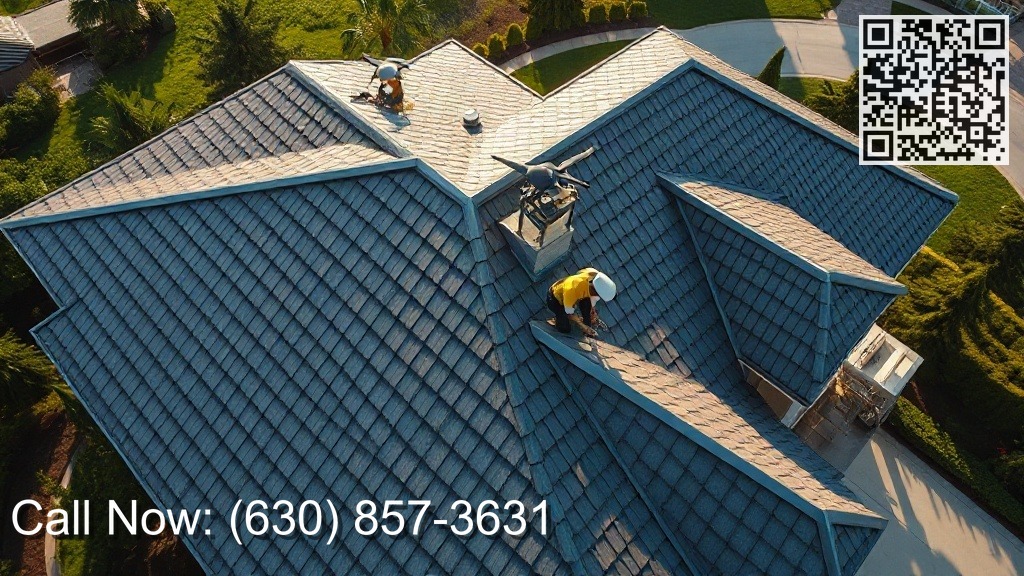
That is particularly relevant in artificial roofing system substitute projects where the proprietor is already investing considerable money on tear-off, disposal, blinking work, and site logistics. Once the roofing is open, it deserves asking whether the chosen product will truly match your house and the climate for the next a number of decades.
Climate-smart roof is actually about informed restraint
The best roof covering decisions in Chicago are seldom the flashiest ones. They come from understanding the building, the weather condition, and the compromises. Synthetic roofing fits this market when it is chosen for functional reasons as long as aesthetic ones. It can supply the appearance of premium typical materials while minimizing weight, improving resilience, and reducing upkeep demands in a punishing climate.
For owners taking into consideration artificial roof Chicago options, the goal should not be to chase after trends. It must be to choose a product and an installer that respect what this climate does to roof coverings year after year. That indicates looking past surface area look and asking exactly how the roofing will certainly do after 10 winters https://waylonsuti907.yousher.com/how-an-artificial-roofer-assesses-weather-related-roofing-threats months, several storm periods, and long stretches of summer sun.
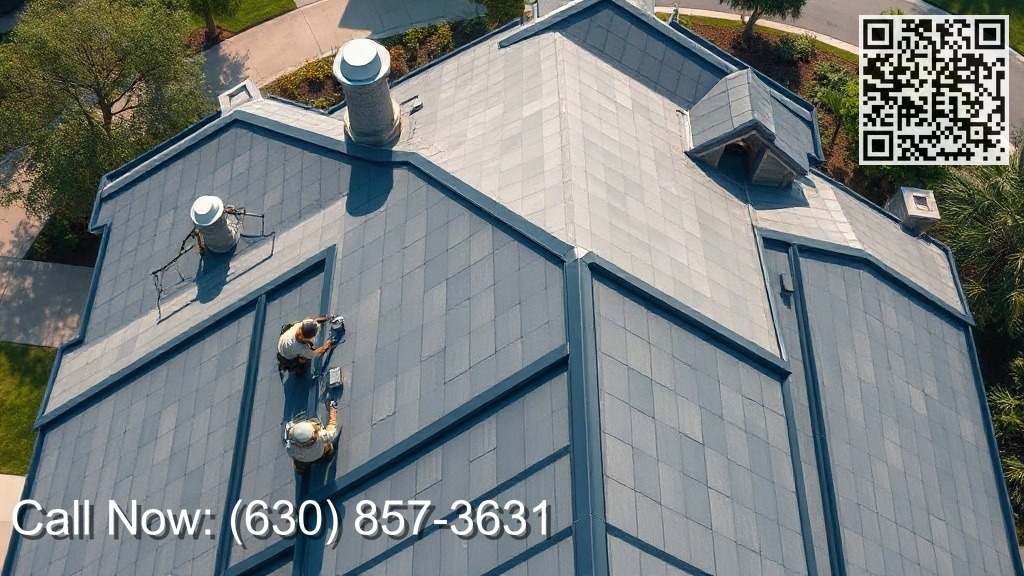
When an artificial professional roofer comes close to the project in this way, the outcome is normally a roofing that feels exactly on the house, performs like it belongs in the area, and holds its value under conditions that subject every weak choice. In Chicago, that is what climate-smart actually means.
When Quality Matters
Salvo Architectural Roofing Contractors
566 West 5th Ave Naperville, IL 60563
(630) 857-3631
 Ask ChatGPT
 Ask Grok
 Ask Perplexity
 Ask Claude
 Ask Google AI
 Ask You